Session: Medical Education 4: Technology and Simulation
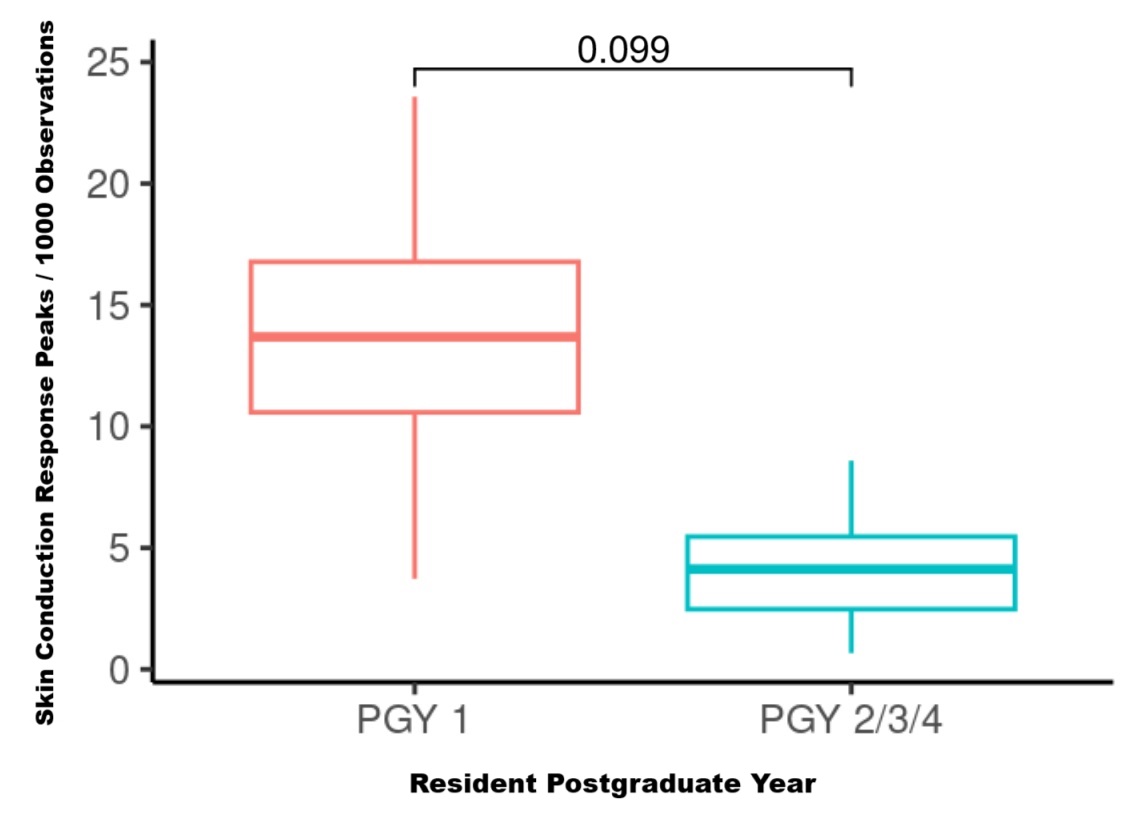
217 - Electrodermal activity (EDA) confirms that PGY-1s experience more stress and distress during simulation than residents of other PGY levels.
Saturday, April 26, 2025
2:30pm - 4:45pm HST
Publication Number: 217.4663
Michael A. Ferguson, The Barbara Bush Children's Hospital at Maine Medical Center, Cape Elizabeth, ME, United States; Micheline Chipman, The Barbara Bush Children's Hospital at Maine Medical Center, Portland, ME, United States; Anya Cutler, MaineHealth Institute for Research, Montpelier, VT, United States; Erika L. Mayer, MaineHealth Institute for Research, Gorham, ME, United States; Leah Marie Seften, The Barbara Bush Children's Hospital at Maine Medical Center, Portland, ME, United States; Michael Zubrow, The Barbara Bush Children's Hospital at Maine Medical Center, Portland, ME, United States; Mary C. Ottolini, The Barbara Bush Children's Hospital at Maine Medical Center, Portland, ME, United States
Pediatric Intensivist Maine Medical Center Portland, Maine, United States
Background: Simulation is known to induce stress in participants, with instructors aiming to achieve the ideal level on the Yerkes-Dodson curve, optimizing arousal and performance. Simulation sessions with mixed PGY levels may not target this level equally. Objective: We sought to research if a wearable device measuring EDA would correlate with participants’ subjective levels of stress during simulation events and if the participant’s level of training would be associated with different experiences of stress during simulation events. Design/Methods: After IRB approval, we consented and ran 17 pediatric and medicine-pediatric residents through 3 or 4 simulation sessions each, for a total of 62 events. Throughout the simulations, participants wore Empatica E4 devices. Raw EDA values were converted to tonic and phasic components using EDA Neurokit software. Immediately following each event they were asked their PGY level, their role in the simulation, and a 10-question survey regarding their subjective feelings of stress, distress, nervousness, fear, interest, and control. These were then compared to recorded EDA data with respect to average phasic EDA, total number of skin conductance response (SCR) onsets, and the total number of phasic SCR peaks. Results: The number of SCR peaks positively correlated with higher ratings of stress levels on survey (p=0.023) and higher reported levels of distress (p=0.069). The number of SCR peaks inversely correlated with higher levels of reported control (p=0.022) and interest (p=0.065). Though PGY was not significantly associated with average phasic EDA, the number of SCR peaks strongly trended towards decreasing with increasing years of training: PGY1 to other years (p=0.099). Participant role in the simulation was not significantly associated with average phasic EDA, although leaders tended to have higher EDA than observers or participants.
Conclusion(s): Our study shows that EDA correlates with reported stress and distress and appears to confirm that PGY-1s experience higher levels of both during simulation sessions. As distress infers levels of stress past optimal, further studies need to be performed to see if the increased stress is due to the complexity of the simulation sessions or is inherent in the earlier stages of training. Either way, EDA could be used to guide intern-specific simulations to optimize arousal and performance at this training level.