750 - Adherence to Follow Up Guidelines After Initiation of SSRI Medication in an Academic Pediatric Primary Care Clinic
Saturday, April 26, 2025
2:30pm - 4:45pm HST
Publication Number: 750.3947
Katherine Martin, Northwestern University School of Medicine, Chicago, IL, United States; Jeanne Greenblatt, Northwestern University The Feinberg School of Medicine, Lurie Children's Hospital of Chicago, Chicago, IL, United States; Maheen Quadri, Northwestern University The Feinberg School of Medicine, Chicago, IL, United States; Nina L.. Alfieri, Ann & Robert H. Lurie Children's Hospital of Chicago/Northwestern University Feinberg School of Medicine, Chicago, IL, United States
Assistant Professor of Pediatrics Ann & Robert H. Lurie Children's Hospital of Chicago Chicago, Illinois, United States
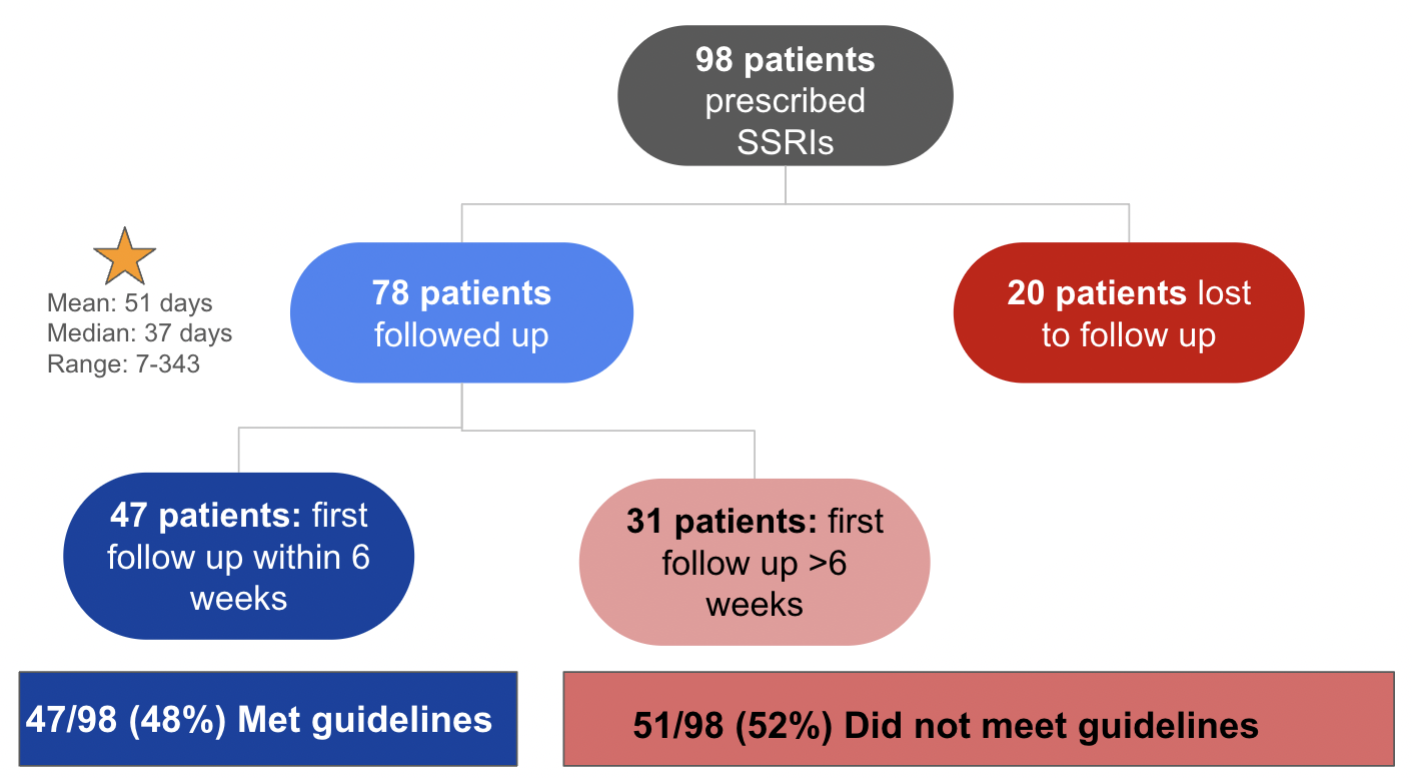
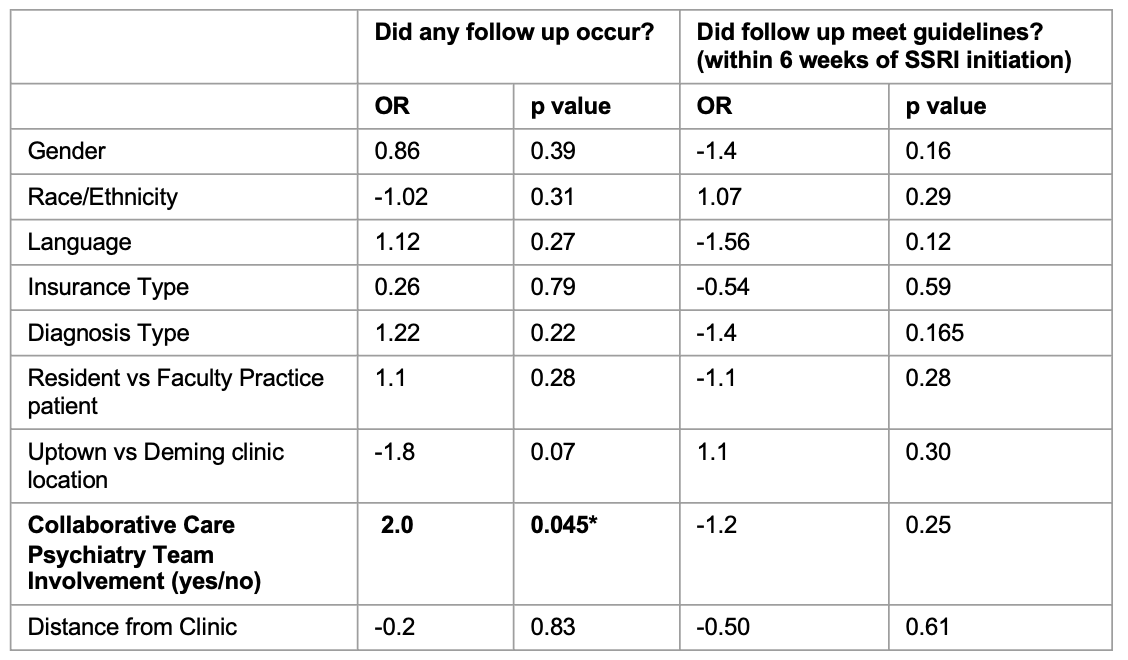
Background: Many pediatric primary care clinics have responded to the mental health (MH) crisis by integrating MH care into the medical home, including prescribing SSRI medications for the treatment of anxiety and depression. The American Academy of Child and Adolescent Psychiatry (AACAP) clinical practice guidelines for the treatment of anxiety and depression recommend an initial follow up visit no longer than 4-6 weeks after SSRI initiation to assess for side effects and titrate to effective dosing. Objective: Examine time to first follow up after SSRI initiation to assess our clinic’s adherence to national guidelines. Design/Methods: This was an observational study using electronic health record data for patients ages 6-18 years old prescribed a SSRI between December 2022 and December 2023 at either of two Lurie Children’s general pediatric clinics which serve a predominantly urban, publicly insured, minority population in Chicago. Manual chart review was completed to identify date of first follow up after SSRI initiation. Logistic regression was used to examine odds of having follow up, and follow up visit timing within 6 weeks based on factors such as visit purpose and type, patient demographics, resident vs. attending PCP and involvement of psychiatry collaborative care team. Results: Of the 98 patients prescribed an SSRI in our clinics during the study period, 20% were lost to follow up. Of the 78 patients who had follow up, 48% met AACAP guidelines for follow up timing within 6 weeks (average follow up time 51 days). Odds of having follow up within the recommended interval did not differ by patient sociodemographics, clinic location, or provider characteristics, however there was an association between follow up within the recommended interval and involvement of the collaborative care psychiatry team (p= 0.045).
Conclusion(s): The majority of initial follow up visits following SSRI initiation did not occur within the 6-week period recommended by AACAP. Involvement of the collaborative care psychiatry team was potentially protective in ensuring timely follow up. Importantly, follow up timing did not differ based on patient or PCP demographics, suggesting that barriers may pervasively affect all patients and PCPs at both clinic sites. Future work examining MH service utilization in primary care clinics paired with applying a quality improvement approach can help identify opportunities to improve timely follow-up after SSRI initiation (including the 1 in 5 patients lost to follow-up) and to understand and optimize patient-level outcomes such as changes in symptoms with appropriate treatment.
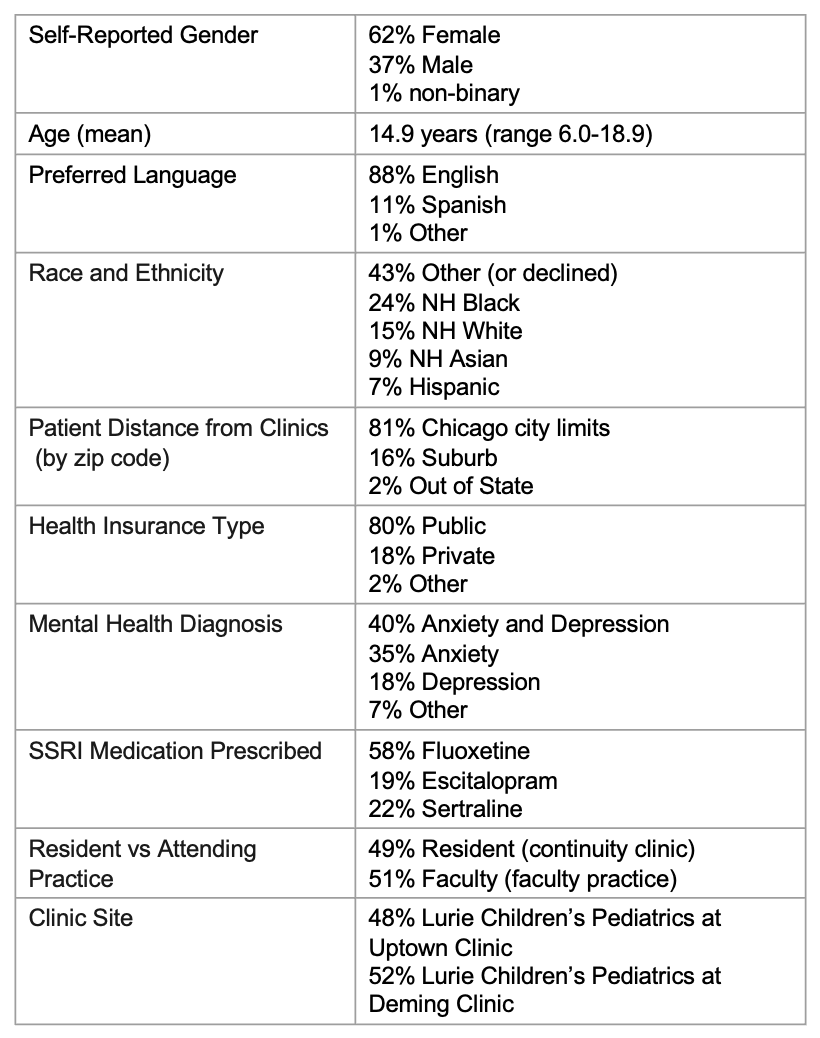
Table 1: Characteristics of Patients Started on SSRI Medications at Primary Care Clinics at Lurie Children’s in Chicago, Dec 2022-Dec 2023 (n=98)
Figure 1: Flow Chart of Follow Up After SSRI Medication Initiation, Dec 2022-Dec 2023
Table 2: Factors Associated with Follow up after SSRI Initiation