544 - A Quality Improvement Project to Promote Team-Based Care on the General Pediatric Inpatient Service
Saturday, April 26, 2025
2:30pm - 4:45pm HST
Publication Number: 544.3724
Kim Hoang, Stanford University School of Medicine, Palo Alto, CA, United States; Kevin Chen, Intermountain Health/University of Utah and Stanford School of Medicine, Sunnyvale, CA, United States; Angelina M. Seffens, Stanford University School of Medicine, Santa Clara, CA, United States; Hannah Bassett, Stanford University School of Medicine, Redwood City, CA, United States; Brandon Garry, Lucile Packard Children's Hospital Stanford, San Francisco, CA, United States; Jennifer Pattison, Lucile Packard Children's Hospital Stanford, Palo Alto, CA, United States; Kathryn Mikolic, Lucile Packard Children's Hospital Stanford, Santa Cruz, CA, United States; Donn Garvert, Stanford University School of Medicine, Los Angeles, CA, United States; Samantha MR. Kling, Stanford University School of Medicine, San Jose, CA, United States; Steven Asch, Stanford University School of Medicine, Los Altos, CA, United States; Lauren Destino, Stanford University School of Medicine, Menlo Park, CA, United States
Fellow in Population Health, Delivery Science & Primary Care University of Utah salt lake City, Utah, United States
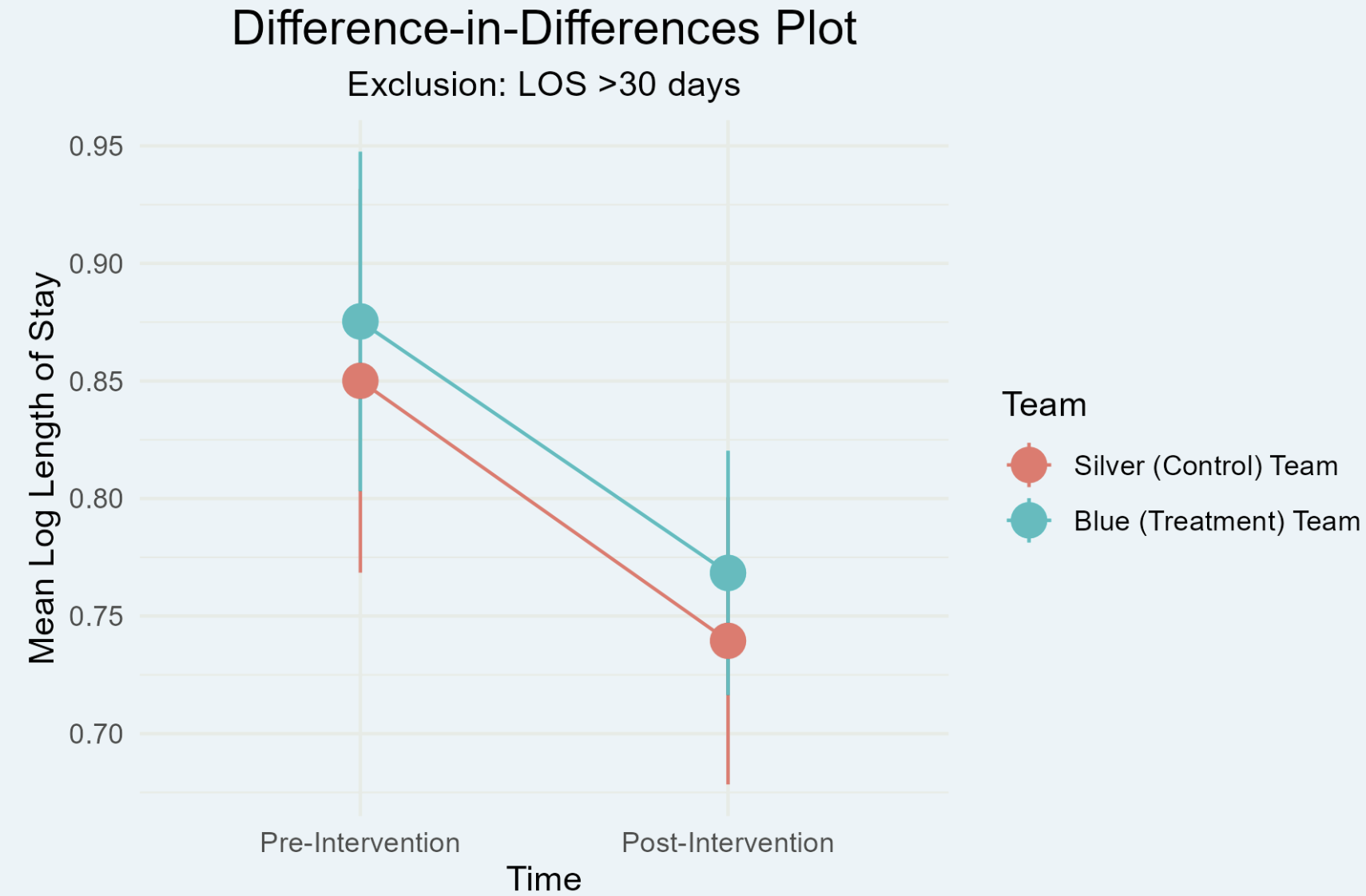
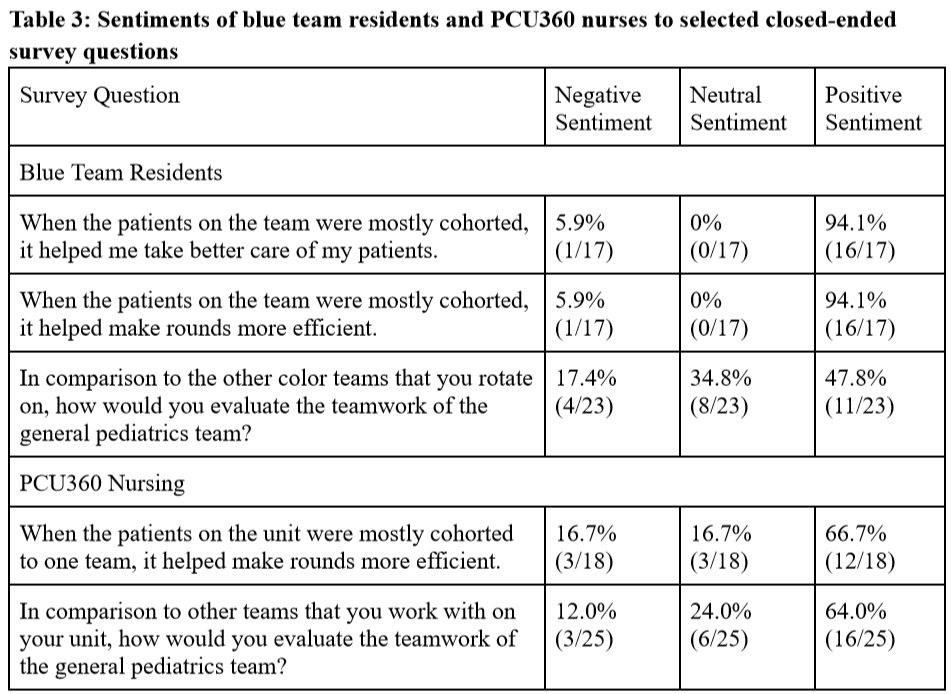
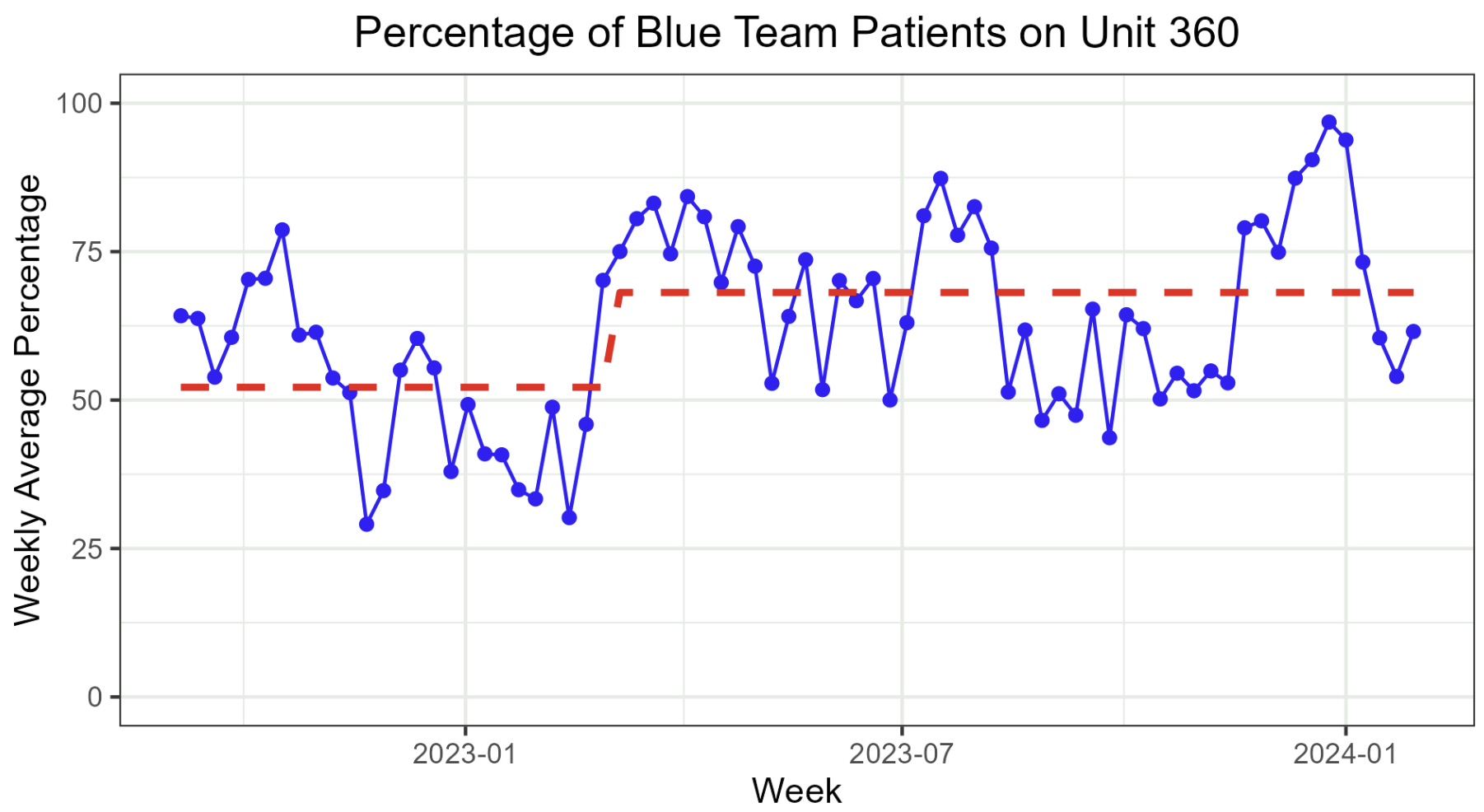
Background: Team-based care models have been shown to promote communication, teamwork, workforce wellness and efficient patient care, with associated benefits including decreased length of say (LOS) and earlier discharges. Geographic cohorting of clinical care teams, successfully implemented in adult hospitals, is one approach to optimizing team-based care. At our institution, general pediatric patients are dispersed across five acute care units between two teams, which may impact patient care and teamwork. Objective: Our project aimed to geographically cohort one general pediatric team’s patients 60% of the time by February 2024 to improve perceptions of teamwork and communication, with a secondary goal to analyze the causal effects of cohorting on LOS. Design/Methods: At our academic quaternary children’s hospital, one general pediatric team was assigned to a single acute care unit from March 2023 to January 2024. Midnight census of patients on their respective unit was used to measure adherence to the intervention. A difference-in-differences (DiD) approach evaluated LOS changes pre- and post-intervention, adjusting for patient complexity, encounters requiring surgery and intensive care stay, and insurance type. Surveys were administered to pediatric residents and nurses to assess their perceptions of teamwork, communication and workflow. Results: The intervention team’s patients were cohorted 62.2% post-intervention from a baseline of 52.2%. The DiD analysis showed no significant difference in LOS between the geographically cohorted and control teams’ patients (p=0.145). However, LOS decreased significantly by 11.3% across both pediatric teams post-intervention compared to pre-intervention (p=0.005). Survey results demonstrated positive perceptions of the intervention, with 94% of residents and 64% of nurses reporting improved teamwork, communication and patient care efficiency. Key themes included improved patient care and workflow, strengthened team communication, and challenges with workload distribution.
Conclusion(s): Promoting team-based care through geographic cohorting at our institution positively enhanced teamwork, communication and provider satisfaction, with a notable post-intervention reduction in LOS across all general pediatric patients. These findings highlight the potential value of geographic cohorting to improve inpatient care. Our institution remains committed to this model, recognizing its benefits for teamwork and patient flow. This experience offers valuable insights for other pediatric hospitals considering similar interventions to enhance patient care.
Differences-in-Differences Model Plot
Sentiments of Residents and Nurses to Geographical Cohorting
Weekly Average Percentage of Blue Team Patients on Unit 360