Deputy Director Nagano Children's Hospital Azumino, Nagano, Japan
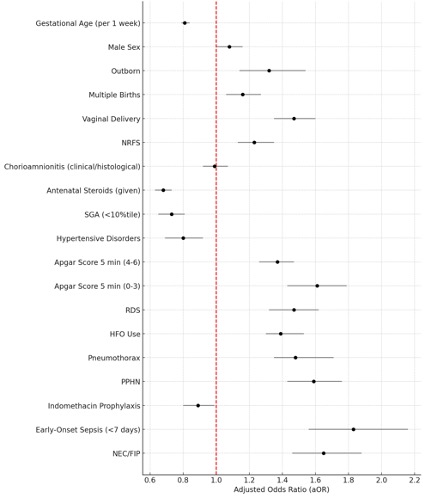
Background: With advances in perinatal care, the survival of extremely low birth weight and extremely preterm infants has improved over the years; however, the incidence of intraventricular hemorrhage (IVH), which is directly related to long-term outcomes, remains unchanged at approximately 10-15% in extremely low birth weight infants in Japan. Objective: This study aims to assess the trend in IVH and risk factors associated with IVH among extremely preterm infants born before 28 weeks of gestation. Design/Methods: This retrospective cohort study collected data from the Neonatal Research Network Japan among extremely preterm infants born between 2003 and 2022. Cochran–Armitage test was performed to examine yearly trends in proportions. Logistic regression was used to analyze the risk factors for IVH. Odds ratios (ORs) with 95% confidence intervals (CI) were estimated and adjusted for confounders. Results: Of 28170 infants, 7041 (25%) had IVH (Table 1), and 2641(9%) developed severe IVH classified as grade III or IV. The incidence of IVH has not decreased (p=0.18). However, the incidence of severe IVH has been decreasing (p < 0.01). Male (adjusted ORs [aORs] 1.08, 95%CI 1.00-1.16), outborn delivery (aORs 1.32, 95%CI 1.14-1.54), multiple births (aORs 1.16, 95%CI 1.06-1.27), vaginal delivery (aORs 1.47, 95%CI 1.35-1.60), non-reassuring fetal status (NRFS, aORs 1.23, 95%CI 1.13-1.35), lower Apgar at 5 min (7-10 ref; 4-6: aORs 1.37, 95%CI 1.26-1.47; 0-3: aORs 1.61, 95%CI 1.43-1.79), respiratory distress syndrome (RDS, aORs 1.47, 95%CI 1.32-1.62), use of high-frequency oscillatory ventilation (HFO, aORs 1.39, 95%CI 1.30-1.53), pneumothorax (PTX, aORs 1.48, 95%CI 1.35-1.71), persistent pulmonary hypertension of the newborn (PPHN, aORs 1.59, 95%CI 1.43-1.76), early-onset sepsis (aORs 1.83, 95%CI 1.56-2.16), necrotizing enterocolitis or focal intestinal perforation (NEC/FIP, aORs 1.65, 95%CI 1.46-1.88) were identified as risk factors for IVH. Larger gestational age (per 1 week, aORs 0.81, 95%CI 0.79-0.84), antenatal steroid (aORs 0.68, 95%CI 0.63-0.73), small for gestational age (SGA, aORs 0.73, 95%CI 0.65-0.81), hypertensive disorders of pregnancy (HDP, aORs 0.80, 95%CI 0.69-0.92), and Indomethacin prophylaxis (aORs 0.89, 95%CI 0.80-0.99) reduced the risk of IVH. (Figure 1).
Conclusion(s): In extremely preterm infants, IVH has not decreased over the past 20 years. However, the incidence of severe IVH has been decreasing. Risk factors for IVH included established risk factors, with hypertensive disorders of pregnancy and indomethacin prophylaxis significantly associated with a reduction of IVH.
Table 1. Clinical characteristics of study participants Table 1.jpegThe statistical analyses were conducted using t-tests for continuous variables and chi-square tests for categorical variables.
Figure 1. Risk factors of intraventricular hemorrhage.