Session: Adolescent Medicine 3: E-Cigarettes & Other Substances
117 - Spiked Buzz: An Analysis of Online Attitudes Toward Caffeinated Alcoholic Beverages
Monday, April 28, 2025
7:00am - 9:15am HST
Publication Number: 117.6600
Eric Wang, Donald and Barbara Zucker School of Medicine at Hofstra/Northwell, Providence, RI, United States; Saia Kalash, Cohen Children's Medical Center, Great Neck, NY, United States; Julian Franco, Donald and Barbara Zucker School of Medicine at Hofstra/Northwell, West Babylon, NY, United States; Ruth Milanaik, Cohen Children's Medical Center, Great Neck, NY, United States
Gap Year Research Intern Northwell Health West Babylon, New York, United States
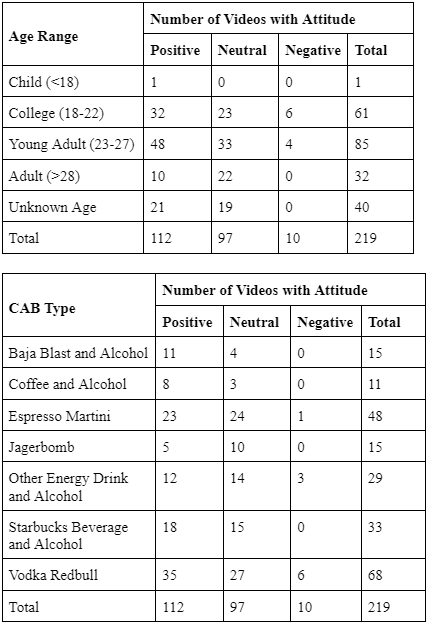
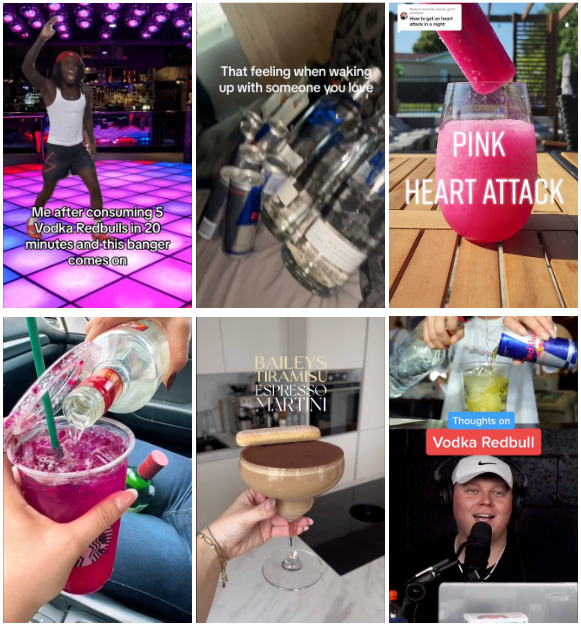
Background: In 2010, the FDA banned the sale of pre-mixed caffeinated alcoholic beverages (CAB) due to their danger and marketing towards younger audiences. CAB pose significant dangers as caffeine can mask alcohol's depressant effects, leading to an underestimated intoxication level. Caffeine can also increase the risk of binge drinking and health effects. Despite this, 1/5 college students report having mixed alcohol with energy drinks. CAB are popular on TikTok, a social media platform primarily used by a young audience. Objective: This study investigates CAB-related TikTok content to understand adolescent exposure to these substances. Design/Methods: TikTok videos tagged under various CAB combinations were collected. Coders collected data on the creator's age and gender, whether or not CAB were shown, type of video content, attitude toward CAB and if health risks were mentioned. Data on likes, shares, comments, saves and views on each video were collected. Data were analyzed in R. Results: 219 videos (287,945,489 views) were included for analysis (Figure 1). Ages ranged from under 18 (n=1), 18-22 (n=61), 23-27 (n=85) and over 28 (n=32). 65.6% (n=122) were female. 81.7% (n=179) of videos showed CAB. 32.0% (n=70) were categorized as Funny/Meme, 1.8% (n=4) were Podcast/Informative, 40.6% (n=89) were Recipe/How-To and 25.6% (n=56) were Story/Vlog. 51.1% (n=112) had positive attitudes toward CAB, 44.3% (n=97) were neutral and 4.6% (n=10) were negative (Table 1). Only 0.9% (n=2) noted the health risks, while 5.9% (n=13) mentioned health risks for comedic purposes. 93.2% (n=204) videos did not mention any health risks. Sentiment analysis of the top 10 comments on each video revealed that those who commented on the videos expressed positive attitudes towards the video.
Conclusion(s): On TikTok, health risks of CAB are largely ignored and its usage has become normalized. A small minority of popular TikTok videos portrayed CAB negatively. The majority of videos, particularly those categorized as Funny/Meme, encourage audiences, who are typically adolescents and young adults, to make and try CAB. A female majority in CAB-related videos is concerning, as they face higher exposure and influence to try CAB, with added danger due to a lower BAC threshold compared to males. Even just lingering on a video will cause TikTok’s algorithm to show the user more videos related to that subject. This heightened exposure to CAB content is especially dangerous due to their normalization and lack of discussion surrounding health risks. This study indicates a need for medical professionals to reinforce to patients the unique dangers of CAB.
Table 1. Attitudes towards CAB by Age Range and Type
Figure 1. Examples of CAB TikTok Content
Table 1. Attitudes towards CAB by Age Range and Type