











Neonatal Pulmonology - Basic/Translational Science 1
Session: Neonatal Pulmonology - Basic/Translational Science 1

Alvaro Moreira, MD, MSc
Associate Professor
The University of Texas Health Science Center at San Antonio Joe R. and Teresa Lozano Long School of Medicine
San Antonio, Texas, United States
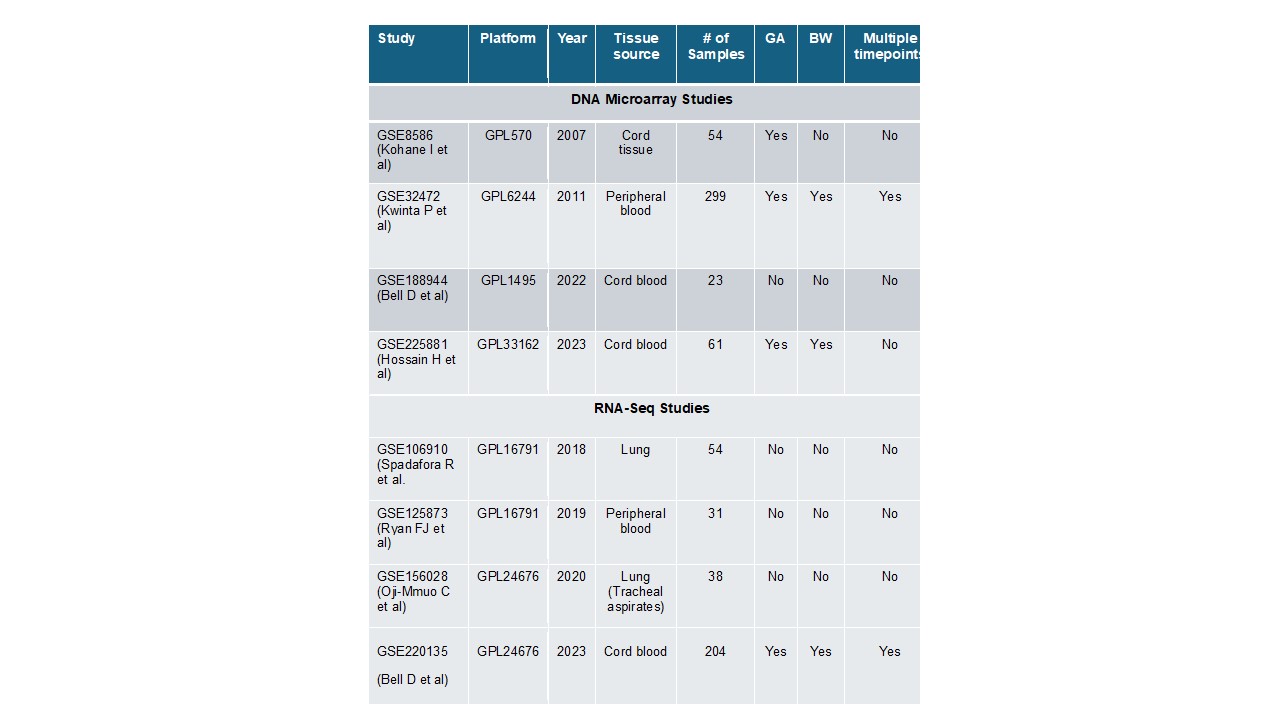 GA-gestational age; BW-birthweight
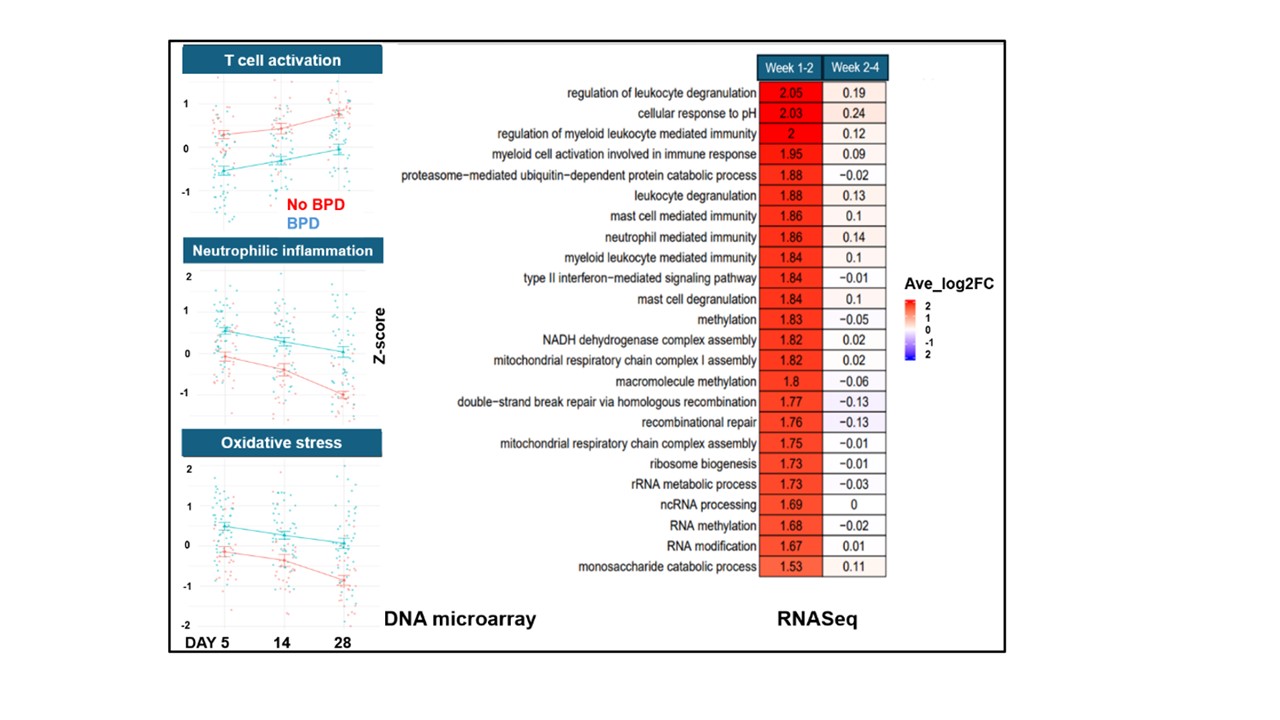 Using longitudinal transcriptomic data from peripheral blood, we identified 483 differentially expressed genes between infants with BPD (n=48, median GA 26 weeks) and those without (n=29, median GA 30 weeks) over the first month of life (NCBI GSE32472). These genes clustered into three key pathways: T cell activation, neutrophil-mediated inflammation, and oxidative stress. While both groups showed increased T cell activation over time, BPD infants had lower overall expression. In contrast, they exhibited persistently elevated neutrophil activity and oxidative stress across all time points (days 5, 14, and 28), with p<0.05 for all comparisons.
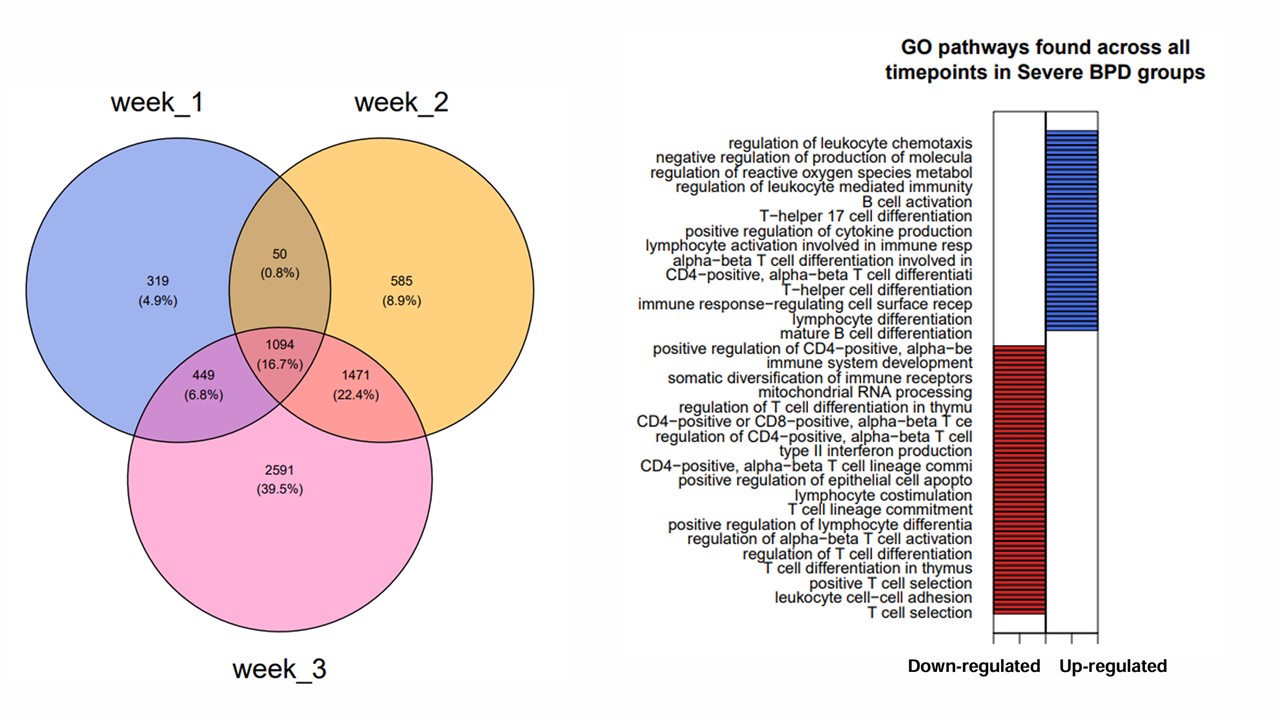 Bioinformatic analysis of transcriptomic data reveals gene expression patterns distinguishing severe bronchopulmonary dysplasia (BPD) from other conditions. (Left) Venn diagram showing the distribution of differentially expressed genes across three timepoints (weeks 1, 2, and 3). Genes in the overlapping section (n=1,094) represent those consistently differentially expressed at all timepoints, highlighting a core set of genes associated with severe BPD. (Right) Gene Ontology (GO) pathway analysis of these intersection genes, with bars indicating pathways up-regulated (blue) and down-regulated (red) across all timepoints. Key pathways involve immune response regulation, T-cell differentiation, and leukocyte chemotaxis, emphasizing immune system involvement in the pathophysiology of severe BPD.